Launch offer — valid today only

📄 Digital book in PDF · read it on your phone or print it

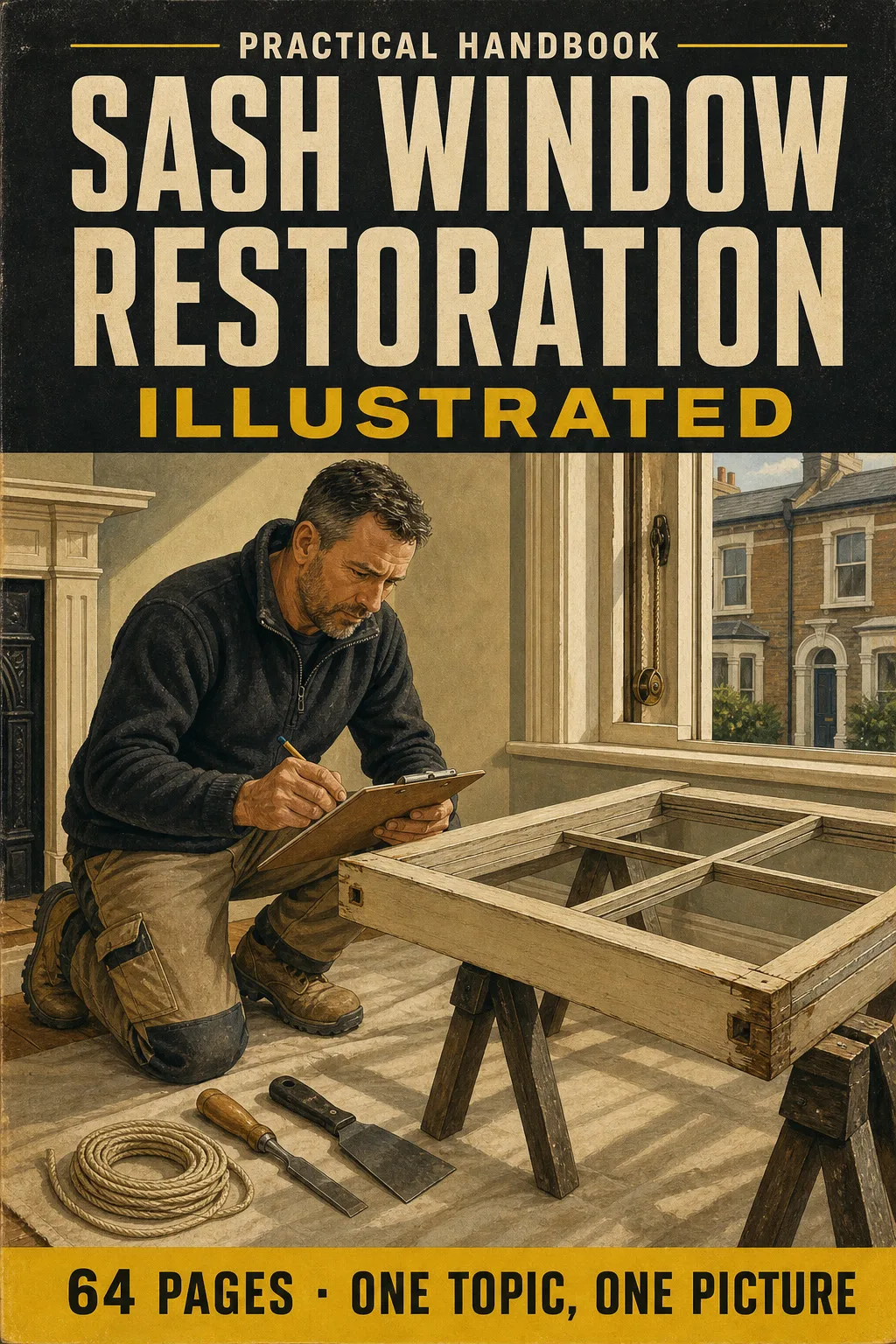
Box Sash Windows, From Cords to Putty, in Drawings Every Job in the Same Order

For joiners, handymen and handy owners of period homes. UK box sashes with weights and pulleys, in millimetres and kilos: cords and weights, the parting bead, rot and spliced sills, linseed oil putty, lead paint safety, painting without sealing the sashes shut and draught-proofing. Every topic has its own page: the drawing first, then what you need to remember. 64 illustrated pages.

GET THE ILLUSTRATED SASH BOOK

🔒 Secure checkout · PDF by email · 30-day guarantee

Every topic, its own pageEach job drawn in cutaway, with the explanation alongside
64 illustrated pages8 parts, from how a box sash works to troubleshooting at a glance
Up-to-date sourcesHistoric England guidance, HSE lead guidance and Building Regulations Parts L and K
PDF by emailFormat

Look Inside the Book

Every page has a large drawing and a box with the measurements and steps you need to know:

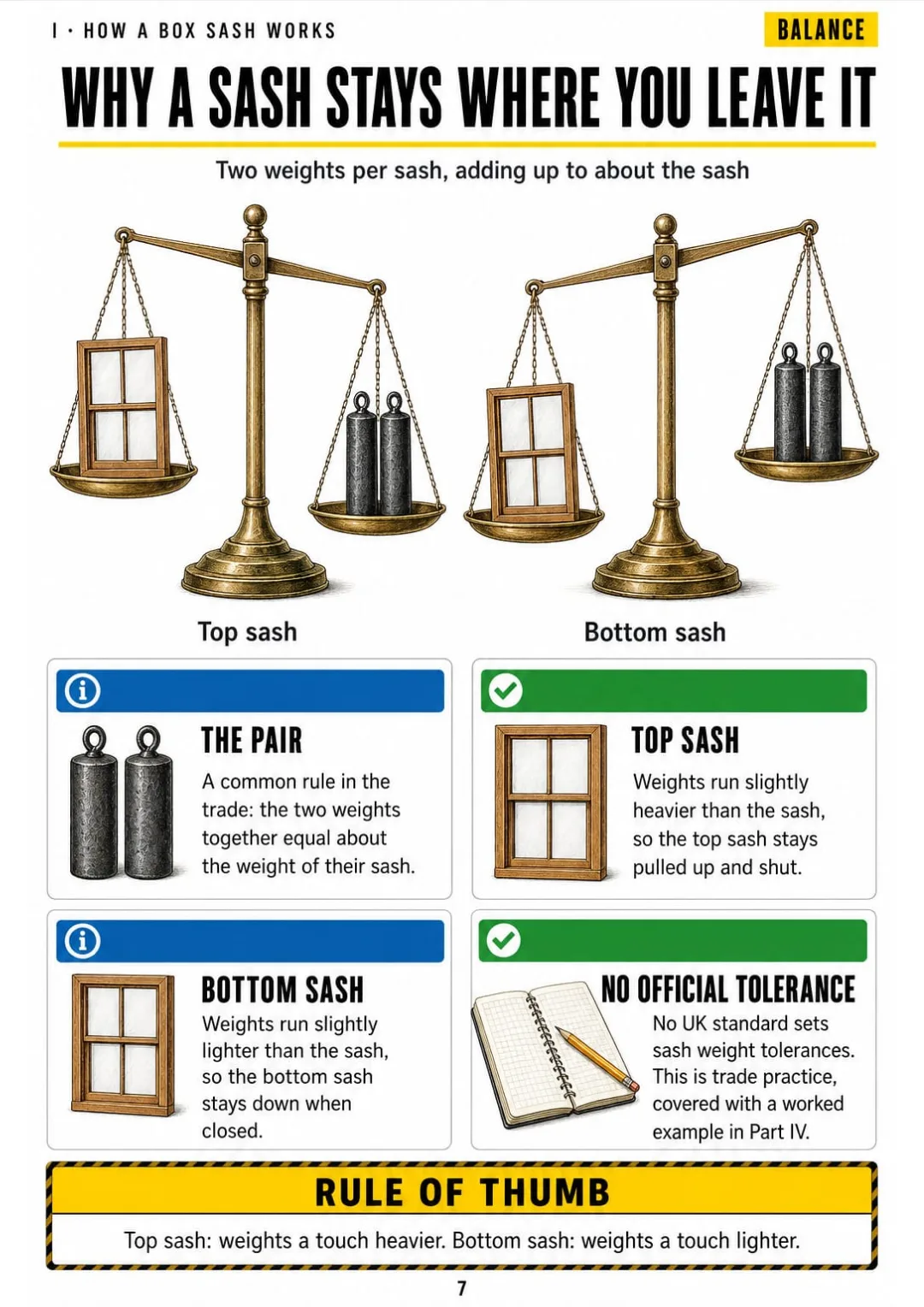
Top sash weights slightly heavier, bottom sash weights slightly lighter
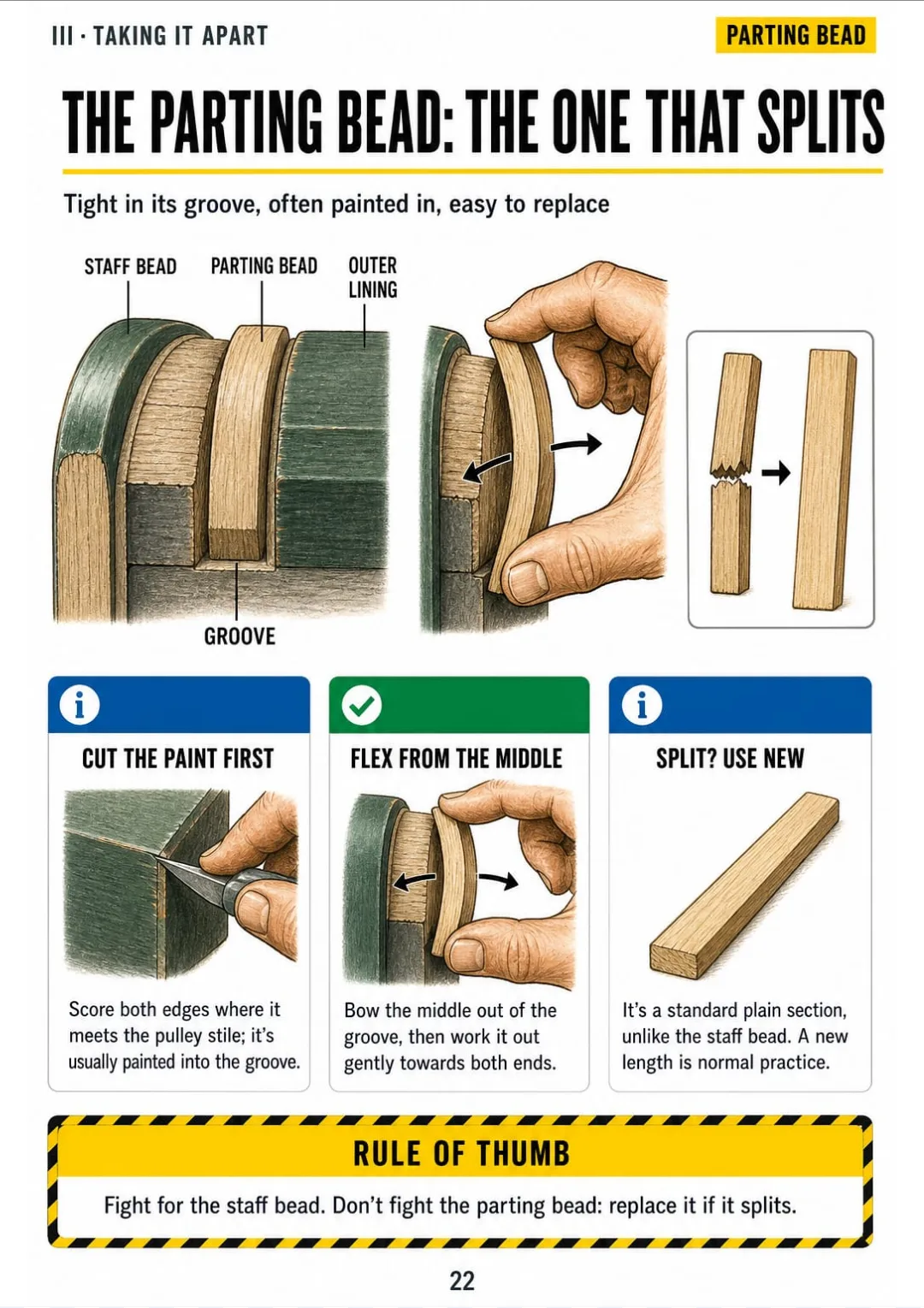
Parting bead: score, flex from the middle, and fit a new standard length if it splits.
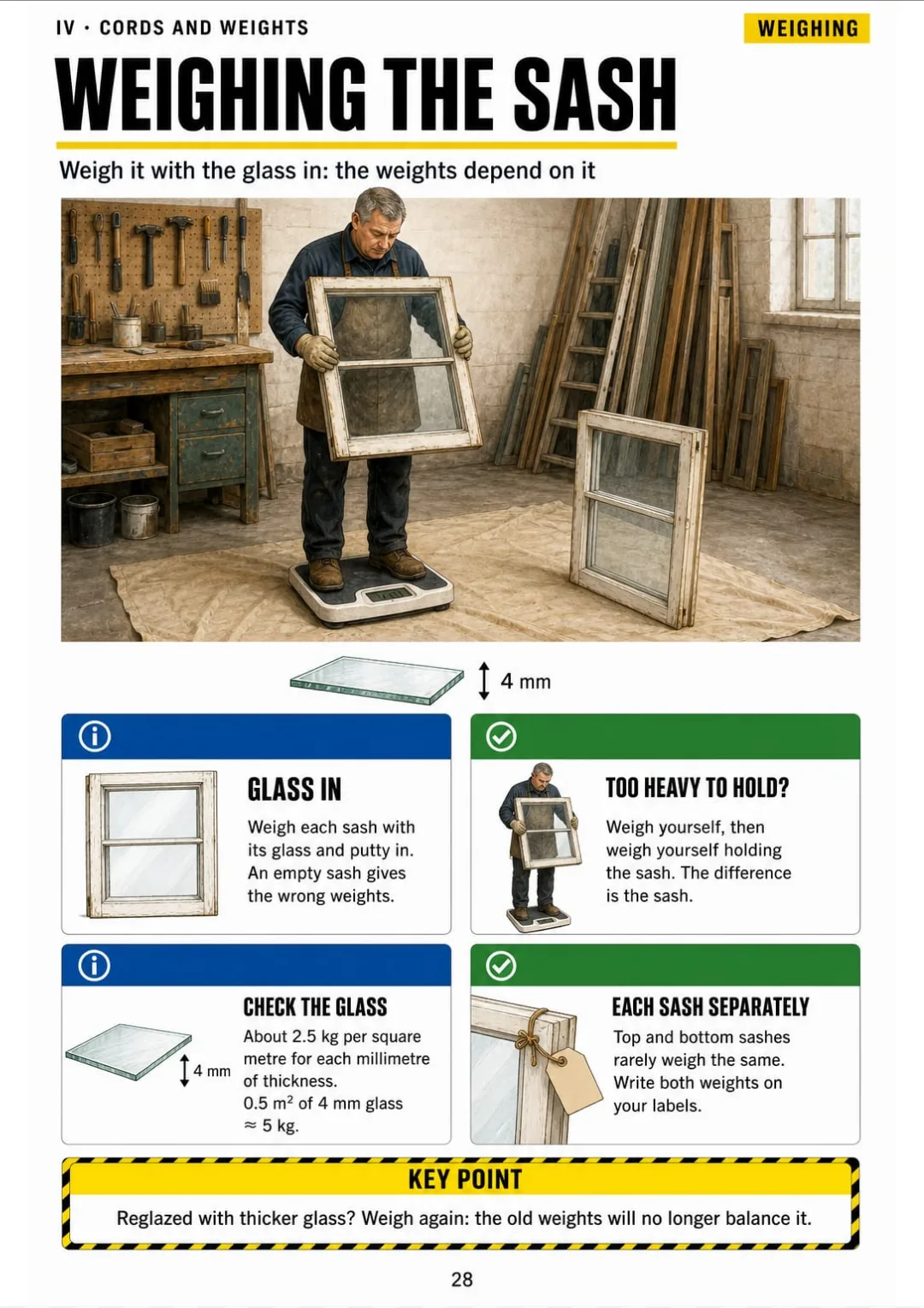
Glass weighs about 2.5 kg per m² for each mm of thickness
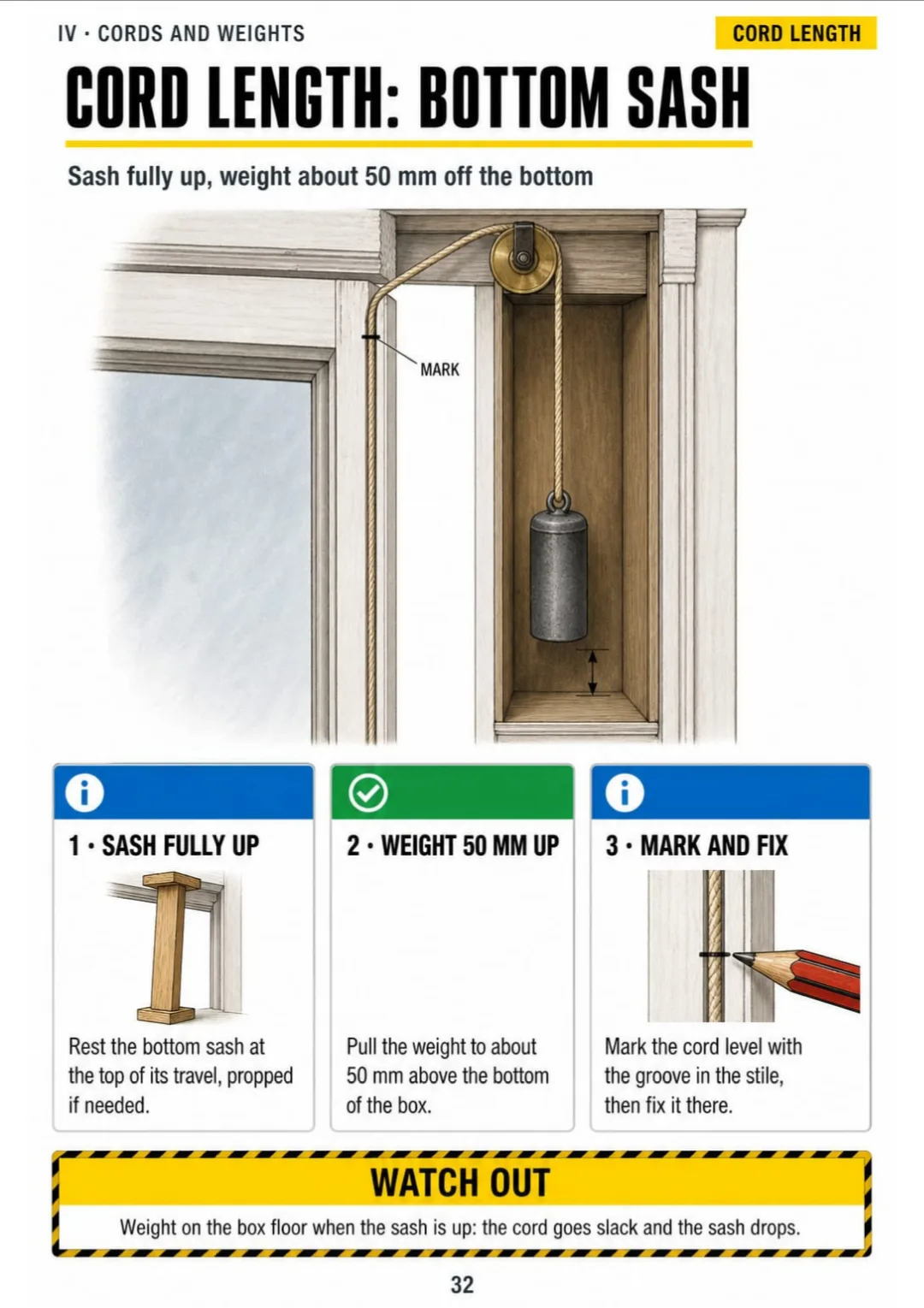
Bottom sash up: weight about 50 mm above the bottom of the box
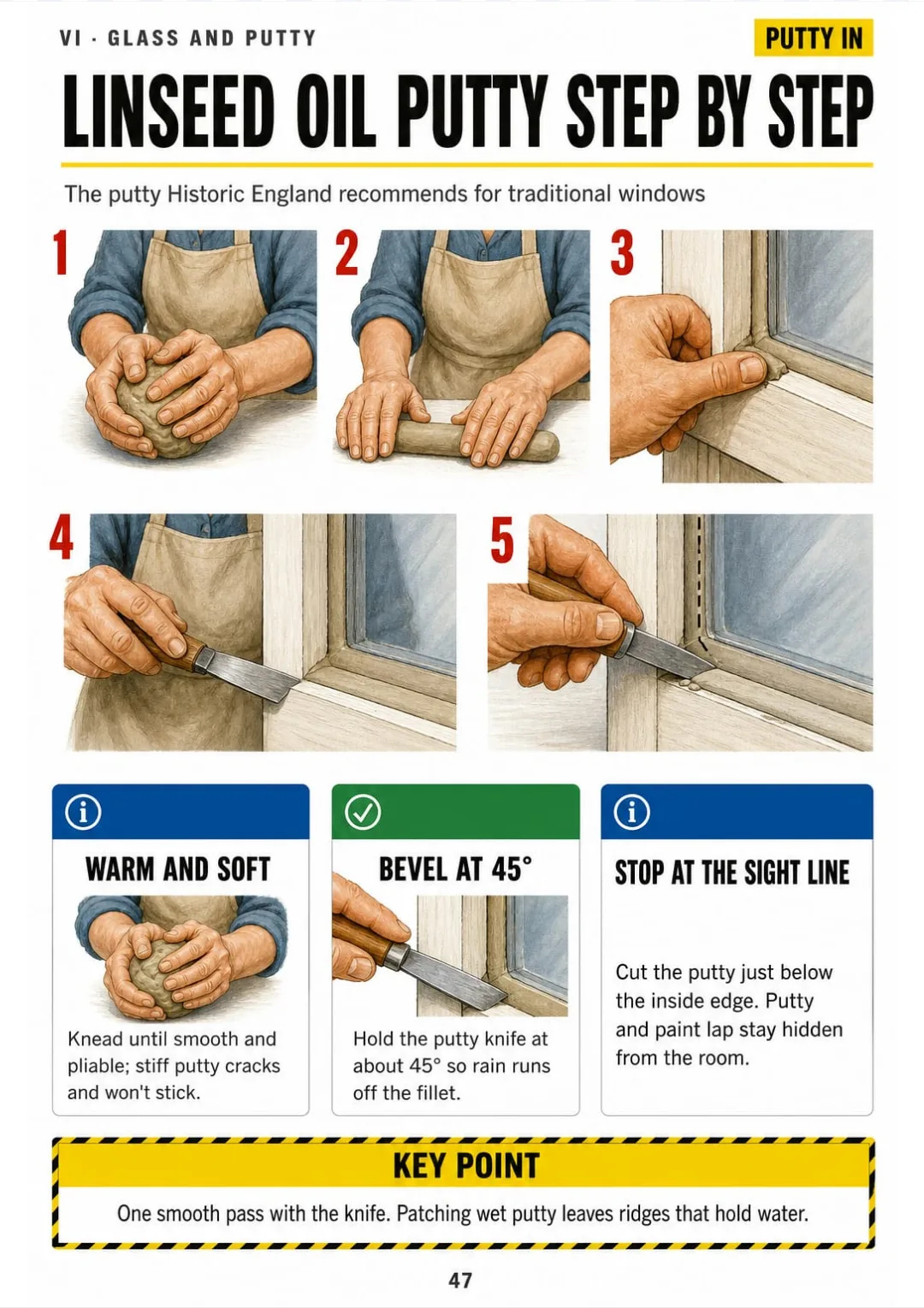
Linseed oil putty in 5 steps, bevelled and cut to the sight line
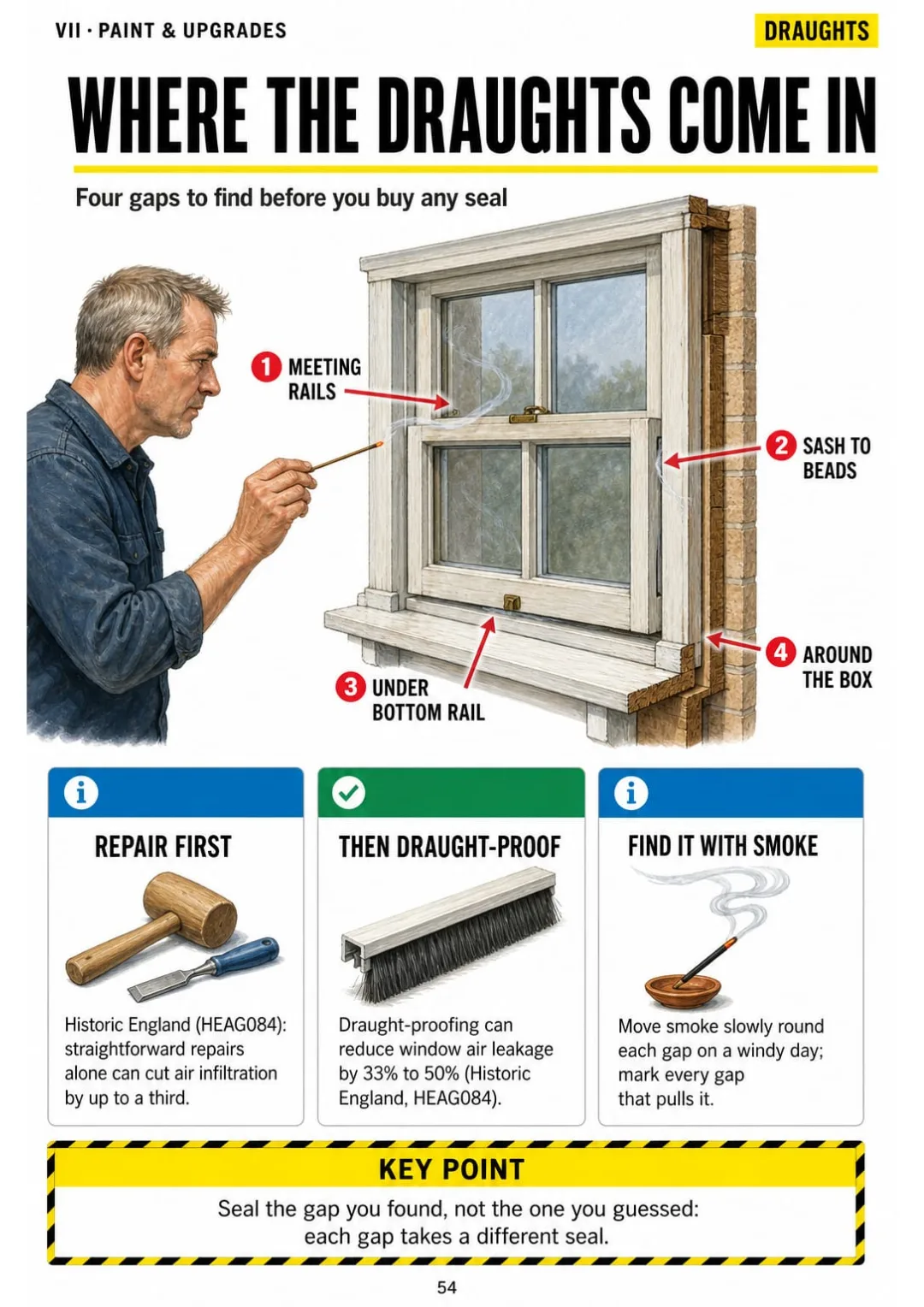
Meeting rails, beads, bottom rail, box: draught-proofing cuts leakage 33-50% (HEAG084).
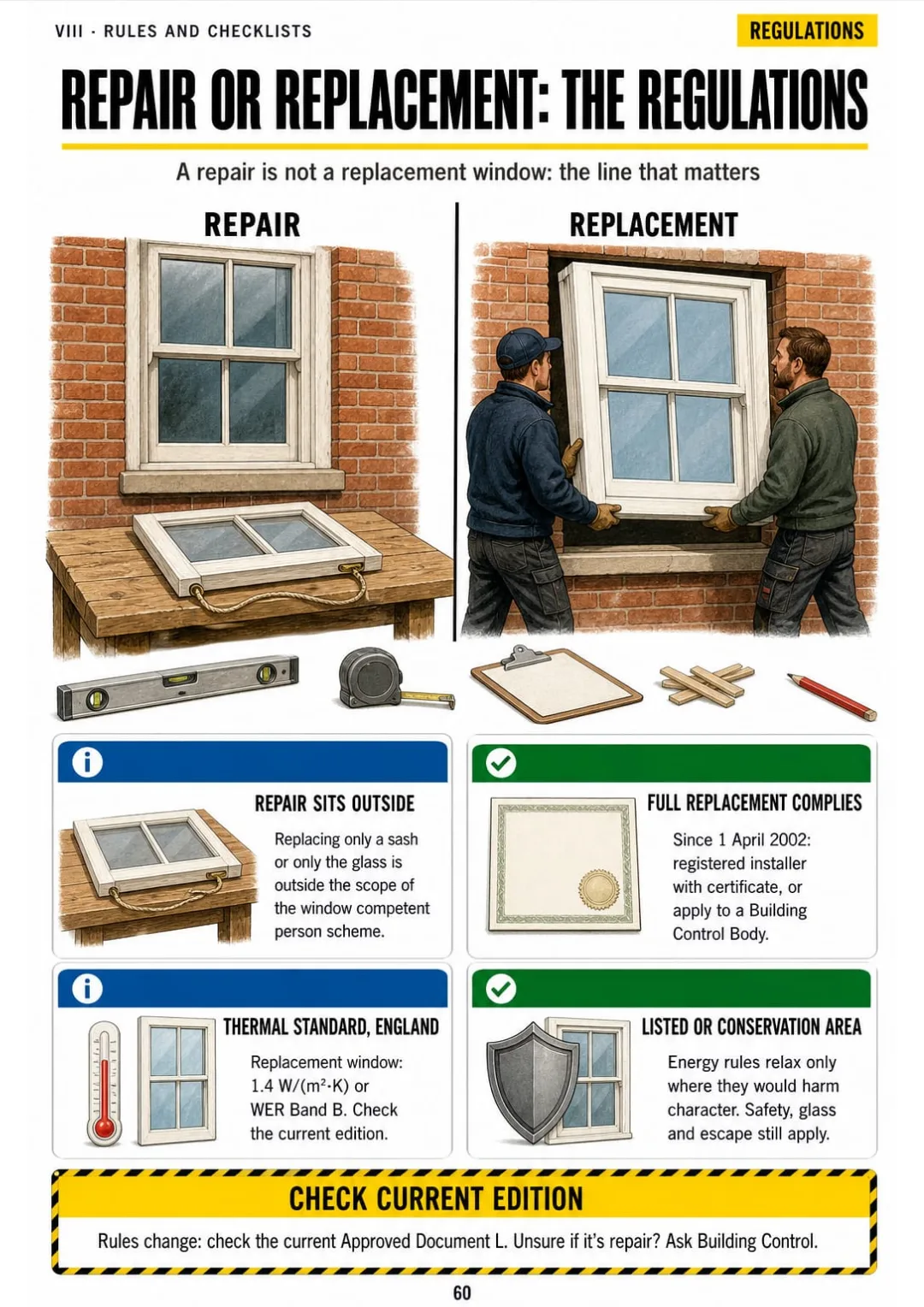
Replacement windows in England: 1.4 W/(m²·K) or Band B; repairs sit outside the scheme
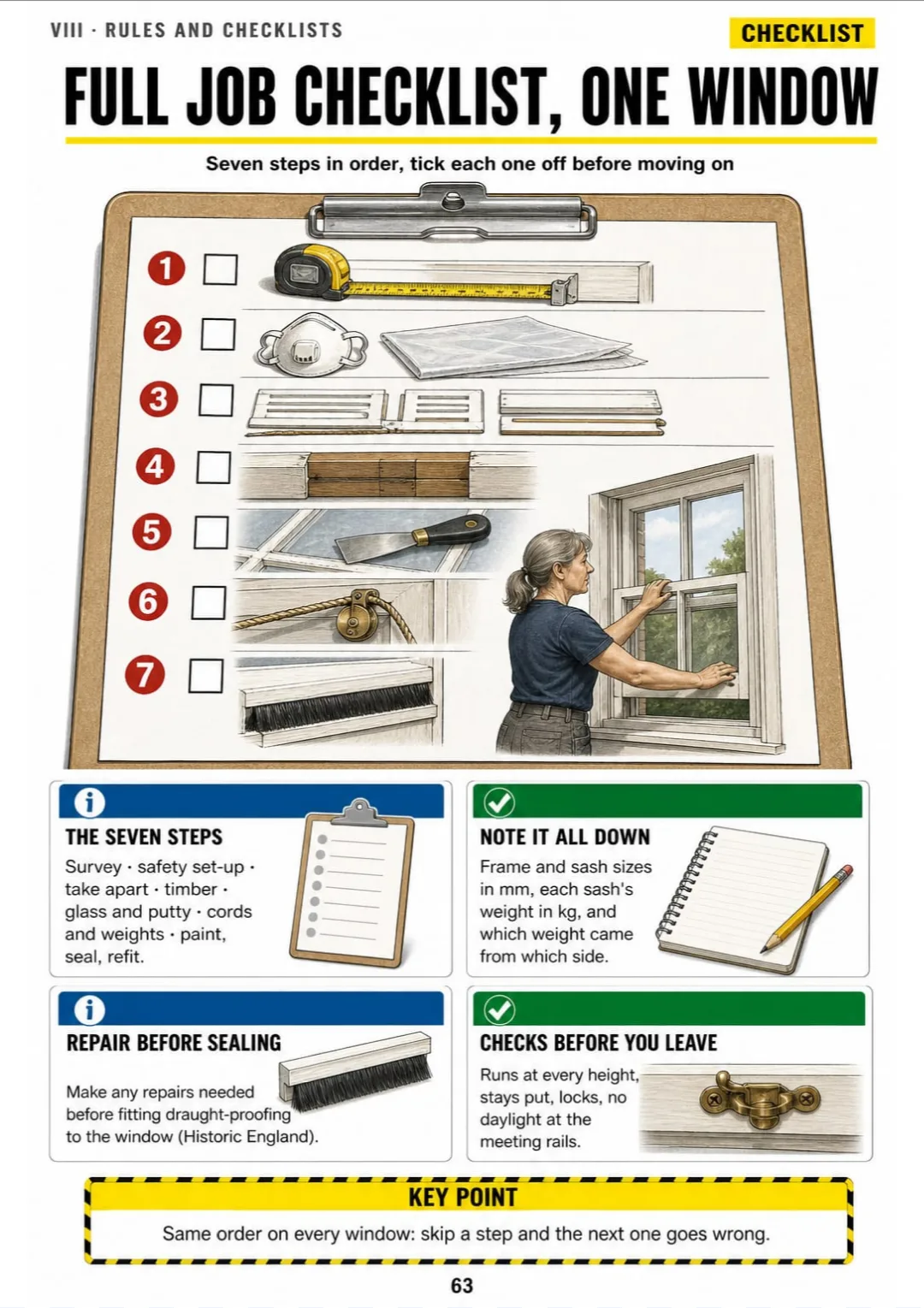
One window, seven steps: survey to final seal, with four checks before you leave

Swipe to see more →

These are real pages from the book. The table of contents is the full one: 8 parts and 60 topics.

The Problem Isn't You. It's How It Was Explained to You.

Both sashes are out, the pocket's open and four old iron weights are lying on the dust sheet. You can't tell which pair belongs to which sash.

The conservation guide gives it two dense paragraphs on counterbalance and mass. Nothing in there tells you which weight goes where.

Glass weighs about 2.5 kg per m² for each mm of thickness

Here it's one page: the sash on the scales at 9 kg, split into two weights of about 4.5 kg, drawn hanging in the box. Lighter below, heavier above, with the worked numbers in a box beside it.

The same goes for the parting bead, setting the cord length for the bottom sash, linseed oil putty, and where the draughts come in. Each one has its own page.

You see the drawing, you match the weights and the sashes stay where you leave them. No going back to the guide halfway through the job.

COMPARE FOR YOURSELF

The Same Job, Two Ways to Learn It

THIS
  • The manual: line after line
  • Parting beads explained in words alone
  • You turn up to the job with doubts
The parting bead, being housed within a groove in the pulley stile and frequently secured by numerous layers of paint applied over successive decades, presents a considerable risk of fracture upon removal. The operative should first score the paint film along both arrises, thereafter applying gradual pressure towards the centre of the bead so as to induce sufficient flexure to withdraw it from the groove, whereupon, should splitting occur, replacement with a section of standard dimensions is generally to be preferred over any attempted repair.
FOR THIS
  • The parting bead in one drawing
  • The steps and measurements in a box
  • You see it and you get it
Parting bead: score, flex from the middle, and fit a new standard length if it splits.
CONTENTS

Take a Look at the 8 Parts and 60 Topics

How a box sash works, survey and safety, taking it apart in order, cords and weights, timber repairs, glass and putty, paint and draught-proofing, and rules and checklists: 64 pages, all illustrated

IHow a Box Sash Works · pp. 5-11
  1. The box sash in one cutaway
  2. Three beads, three jobs
  3. Counterbalance: why a sash stays where you leave it
  4. Inside the box: weights, parting slip and pocket
  5. Sash anatomy: rails, stiles, bars and horns
  6. Georgian, Victorian, Edwardian: telling them apart
  7. Why sashes stick, rattle and leak air
IISurvey and Safety First · pp. 12-18
  1. The order every job follows
  2. Surveying a window in ten minutes
  3. Measuring a sash window in millimetres
  4. Lead paint: assume it's there
  5. Lead safety for the trade
  6. Glass, height and falling weights
  7. The toolkit for sash work
IIITaking It Apart in Order · pp. 19-26
  1. Cutting the paint line without tearing
  2. Removing the staff bead
  3. Taking out the bottom sash
  4. The parting bead: the one that splits
  5. Taking out the top sash
  6. Opening the pocket and getting the weights out
  7. Labelling and storing parts
  8. When a sash is screwed or painted shut
IVCords, Weights and Pulleys · pp. 27-35
  1. Choosing sash cord
  2. Weighing the sash
  3. Matching weights to the sash: worked example
  4. Iron or lead weights
  5. Threading the cord with a mouse
  6. Setting the cord length for the bottom sash
  7. Setting the cord length for the top sash
  8. Fixing cord to the sash
  9. Pulleys: clean, free, or replace
VTimber Repairs · pp. 36-43
  1. Repair, don't replace: the conservation rule
  2. Finding the extent of rot
  3. Consolidant and filler: when it's enough
  4. Splicing a new piece into a sill
  5. Repairing a bottom rail
  6. Loose joints and dropped sashes
  7. Pulley stiles and worn running surfaces
  8. Timber for repairs
VIGlass and Putty · pp. 44-50
  1. Recognising historic glass
  2. Removing old putty without cracking the pane
  3. Taking a pane out and back in
  4. Linseed oil putty, step by step
  5. When to paint the putty
  6. Cutting and fitting a new pane
  7. Glazing bars and multi-pane sashes
VIIPaint, Draught-Proofing and Upgrades · pp. 51-58
  1. Stripping paint safely
  2. Primer, undercoat, topcoat: the order
  3. Painting without sealing the sashes shut
  4. Where the draughts come in
  5. Brush seals in the beads
  6. Refitting the beads so it runs smoothly
  7. Secondary glazing, shutters and heavy curtains
  8. Slim double glazing in an old sash
VIIIRules, Checklists and Frequent Mistakes · pp. 59-64
  1. Listed buildings and conservation areas
  2. Repair or replacement under Building Regulations
  3. Frequent mistakes taking a sash apart
  4. Frequent mistakes putting it back
  5. Full job checklist, one window
  6. Troubleshooting at a glance

One Page, One Topic, All Clear

Think of it this way:

A client shows you a bottom sash that won't stay up. You've re-corded it, and now you have to set the cord length before you nail it off.

You open the cord length page: the bottom sash drawn pushed right up, the weight hanging about 50 mm above the bottom of the box, and the steps in a box beside it.

Linseed oil putty in 5 steps, bevelled and cut to the sight line

Same with the parting bead, matching weights to the sash, linseed oil putty and brush seals in the beads. Each one on its own page, drawn the same way.

Sash Window Restoration Illustrated is 8 parts and 60 topics, all drawn, ending with a full one-window job checklist and a troubleshooting table.

What you see drawn, you don't have to memorize.

What's Inside Sash Window Restoration Illustrated:

Ipp. 5-11

How a Box Sash Works

The box sash in one cutaway, the three beads, counterbalance, what's inside the box, sash anatomy, telling Georgian, Victorian and Edwardian apart, and why sashes stick and rattle.

IIpp. 12-18

Survey and Safety First

The order every job follows, so no bead comes off out of turn: a ten-minute survey, measuring in millimetres, lead paint safety for the trade, glass and falling weights, and the toolkit.

IIIpp. 19-26

Taking It Apart in Order

Cutting the paint line, staff bead, bottom sash, the parting bead, top sash, opening the pocket, labelling parts, and sashes screwed or painted shut.

IVpp. 27-35

Cords, Weights and Pulleys

Weigh the sash, split the weight and match each pair with a worked example, so you know which weight goes in which side before you close the pocket. Plus choosing cord, iron or lead, threading with a mouse, cord length for each sash and fixing to the pulleys.

Vpp. 36-43

Timber Repairs

The conservation rule, finding the extent of rot, consolidant and filler, splicing a sill, bottom rails, loose joints, worn pulley stiles and timber for repairs.

VIpp. 44-50

Glass and Putty

Recognising historic glass, removing old putty without cracking the pane, linseed oil putty step by step, when to paint it, cutting new panes and glazing bars.

VIIpp. 51-58

Paint, Draught-Proofing and Upgrades

Stripping paint safely, primer to topcoat, painting without sealing the sashes shut, where draughts come in, brush seals, refitting beads, secondary and slim double glazing.

VIIIpp. 59-64

Rules, Checklists and Frequent Mistakes

Listed buildings and conservation areas, repair or replacement under Building Regulations, frequent mistakes taking apart and putting back, the full job checklist and troubleshooting.

At the end of the book: Worked examples for cords and weights, a full one-window job checklist and a troubleshooting table.
Plus: 2 Free Books

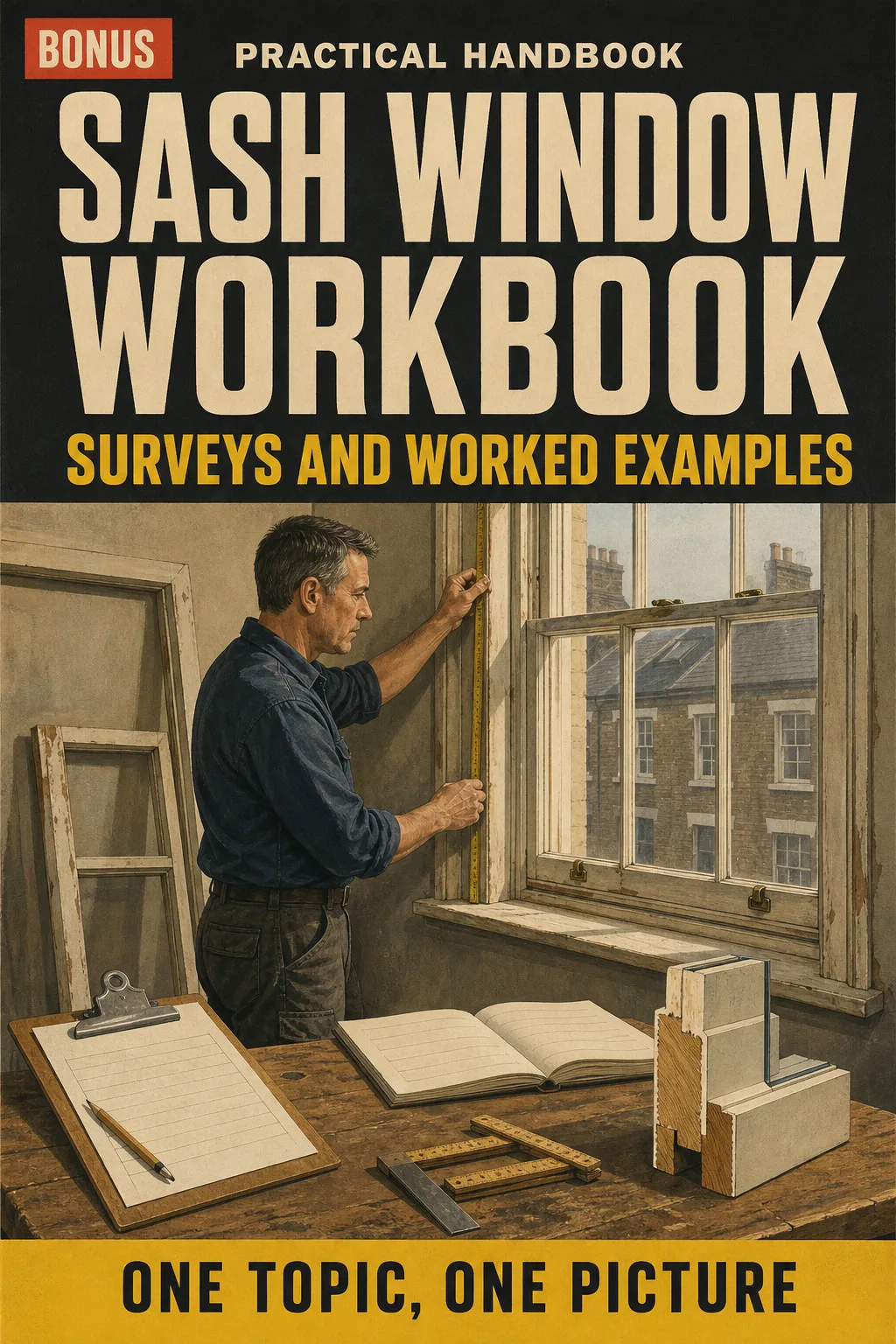
Sash Window Workbook: Surveys and Worked Examples

BONUS 1: «Sash Window Workbook: Surveys and Worked Examples»

Value on its own: US$ 17.90

Practise before you touch a real window: survey a sash on a blank sheet, work out cord lengths and match weights to sashes, with the answers drawn out.

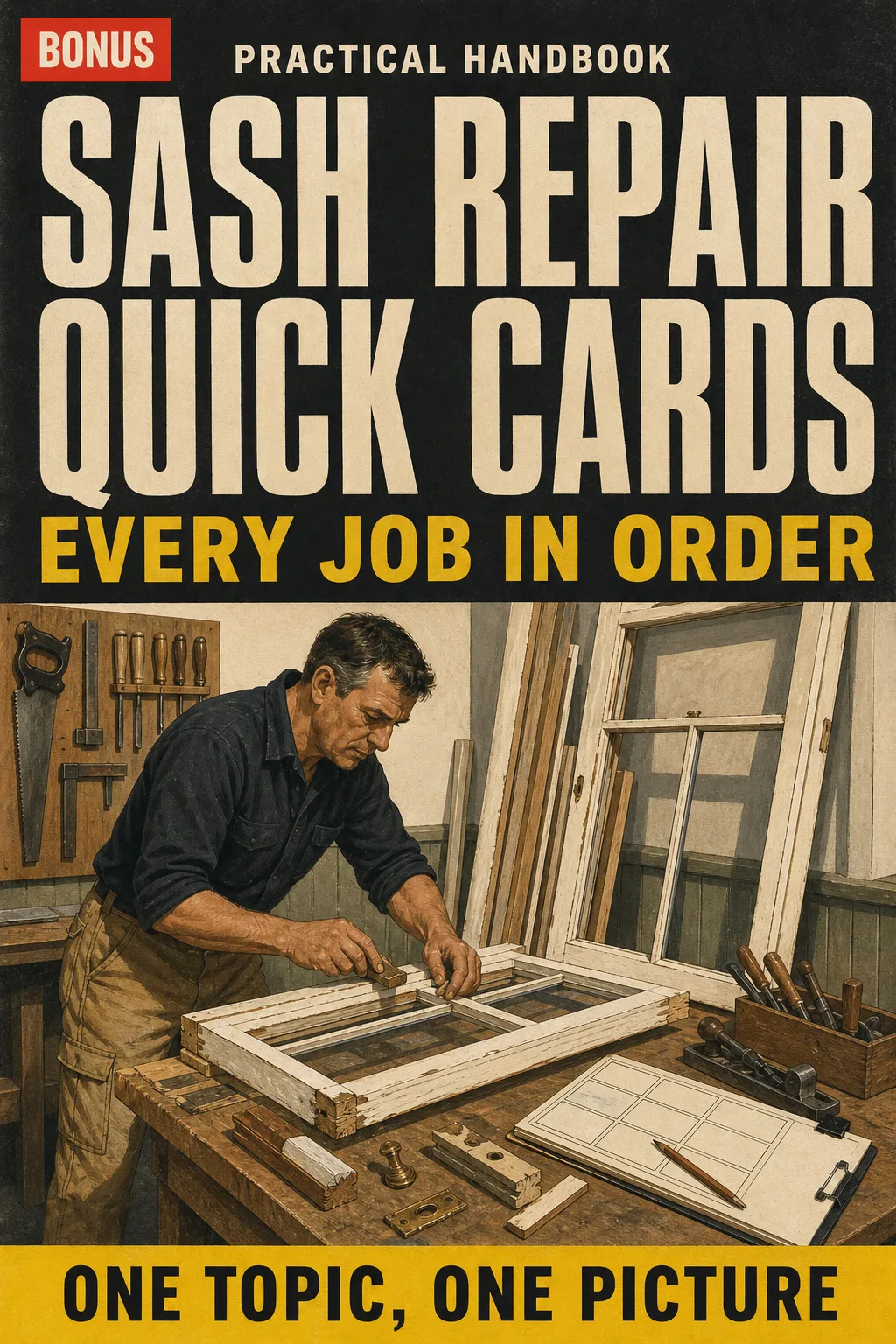
Sash Repair Quick Cards: Every Job in Order

BONUS 2: «Sash Repair Quick Cards: Every Job in Order»

Value on its own: US$ 14.90

One card per job, printed and kept in the toolbag, so you never lose the order when the beads are off and the sashes are out.

Sash Window Restoration Illustrated with 2 Free Books

  • Sash Window Restoration Illustrated: 64 illustrated pagesUS$ 63
  • BONUS 1: Sash Window Workbook: Surveys and Worked ExamplesUS$ 17.90
  • BONUS 2: Sash Repair Quick Cards: Every Job in OrderUS$ 14.90
  • High-resolution PDF to printIncluded
Total value US$ 95.80
YOUR PRICE:
US$ 27
You save US$ 68.80
YES, I WANT SASH WINDOW RESTORATION ILLUSTRATED FOR US$ 27

📄 This is a digital PDF book sent to your email: nothing is printed or shipped.

Secure purchaseEncrypted payment30-day guarantee

PDF by email: We email you Sash Window Restoration Illustrated as a PDF, together with the two free books. It's a single payment: no installments, no extra charges.

Who This Book Is For

You're taking on your first sashes

You're taking on your first sashes

Whether you're a joiner new to period work or an owner fixing your own house, you see what's inside the box before you take a single bead off.

You've a sash job booked

You've a sash job booked

You go through the job in its seven steps beforehand (survey, take apart, cords and weights, timber, glass and putty, paint, draught-proof and refit) and turn up with the cord lengths and weights already worked out.

You already restore sashes

You already restore sashes

You keep every measurement and order in one printed book in the van, and the troubleshooting table to hand when something doesn't run right.

Everything You Get Today

US$ 95.80US$ 27
YES, I WANT SASH WINDOW RESTORATION ILLUSTRATED FOR US$ 27

📄 This is a digital PDF book sent to your email: nothing is printed or shipped.

30DAYS
GUARANTEE

30-Day Guarantee

Try Sash Window Restoration Illustrated for 30 days, bonus books included.

We refund everything if the file won't open, if the book isn't what you see here, if you were charged twice or if the email doesn't arrive. Just email us.

You pay once. No subscriptions.

Frequently Asked Questions

Is it for me if I'm a joiner or handyman already doing period work?

Yes. It's written for UK box sash windows with weights and pulleys, in millimetres and kilos, for people who already use tools. Owners of period homes who are handy will follow it too.

Where does the content come from?

From Historic England guidance on traditional windows, HSE guidance on lead paint and the Control of Lead at Work Regulations, and Approved Documents L and K. The Building Regulations pages follow England; in Scotland, Wales and Northern Ireland, check your own building standards. Every regulatory page is marked to check against the current version.

Is it official material?

No. It's an independent illustrated book. It isn't issued or endorsed by Historic England, the HSE or any local authority, and it doesn't give a certificate or qualification. For listed buildings and conservation areas, always check with your local planning authority.

Does it replace training or professional advice?

No. It's a reference to learn and check the method. It doesn't replace hands-on training, a professional survey or the advice of your local authority.

Does it tell me when I need consent for a listed building or a conservation area?

Part 8 shows the difference between repair and replacement, when listed building consent or planning permission usually comes into it, and what to ask your local planning authority before you start. It doesn't decide for you: the final word is always the council's.

When and how does it arrive?

The book and the 2 free books arrive as PDFs by email, to the address you enter at checkout.

Do I have to pay every month?

No. It's a one-off payment, with no subscription.

Can I have it on paper?

Yes. The PDF is made to print, so you can take the pages you need to the job.

How does the refund work?

You have 30 days. We refund everything if the file won't open, if the book isn't what you see on this page, if you were charged twice or if the email doesn't arrive: just email us.

Before You Close This Page

No more rewatching videos that don't agree.

The parting bead, the cords and the weights: drawn and clear.

You turn up to the job knowing where everything is.

Drawings make studying faster.

The book is right below.

One-time payment: US$ 27 · Guarantee: 30 days · PDF by email

YES, I WANT SASH WINDOW RESTORATION ILLUSTRATED FOR US$ 27

📄 This is a digital PDF book sent to your email: nothing is printed or shipped.